

POLE GUIDE
How to run with poles
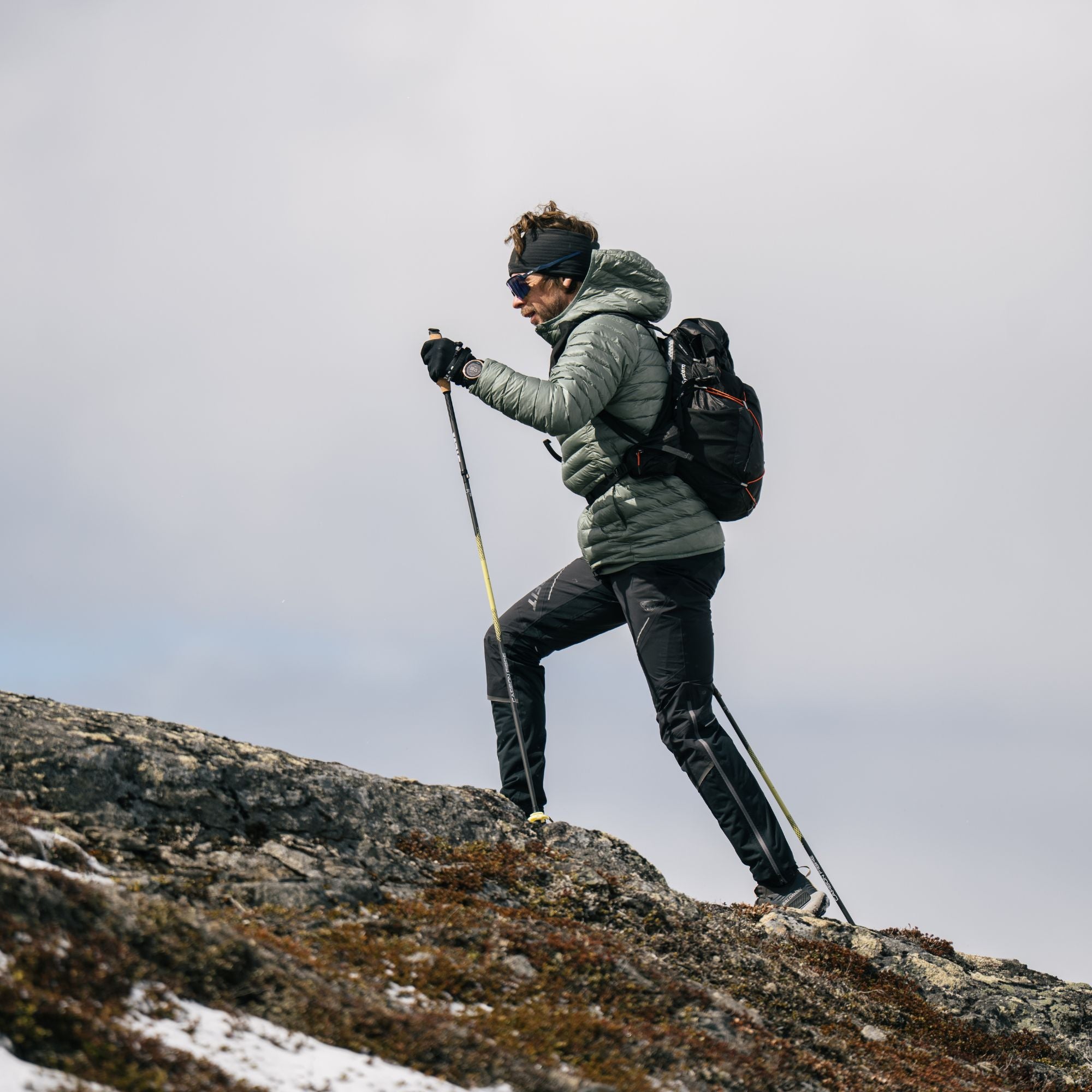
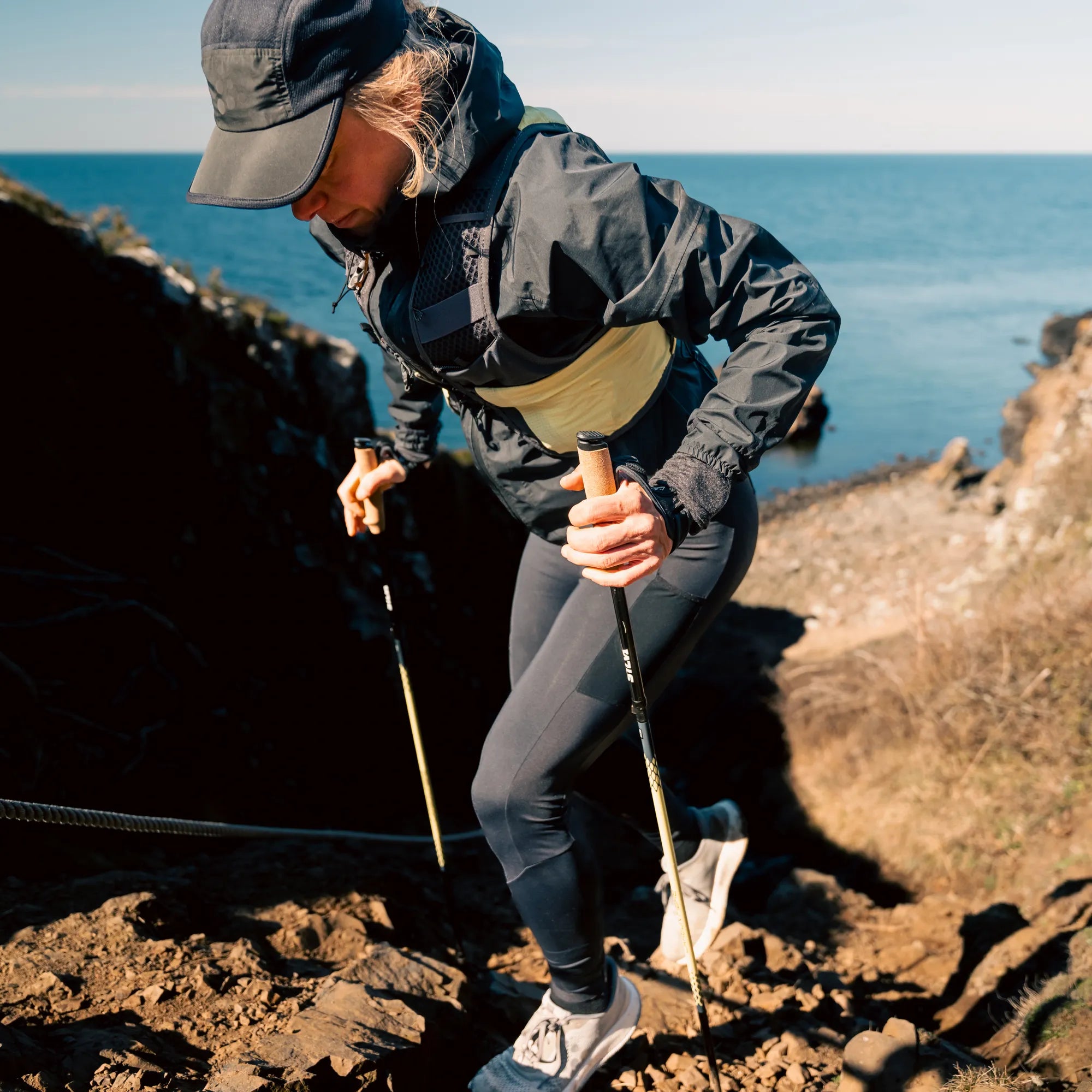
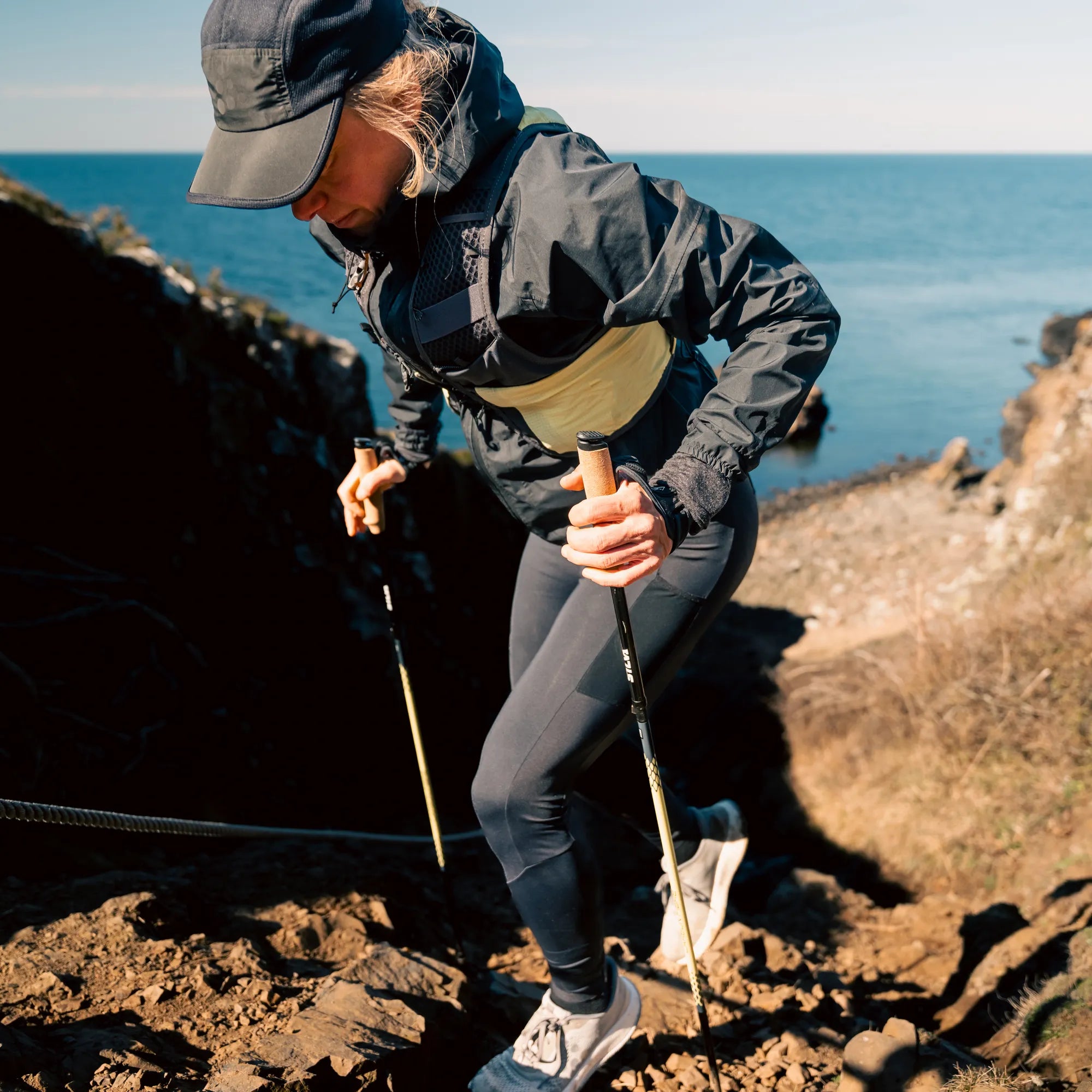
Running poles can transform your trail technique, help you run longer, and keep you in control on steep or technical terrain. But just like any equipment, they work best when used right. Follow these steps to master the basics.
Choose the Right Running Pole Length
The correct pole length makes all the difference. Too long and your shoulders will tire. Too short and you’ll lose efficiency. These are solid guidelines – but not absolute rules. Some runners prefer slightly shorter poles for steep climbs, or slightly longer ones for smoother terrain. Adjustable poles give you flexibility to fine-tune based on the trail and your running style.
Here’s how to get it right:
The height formula
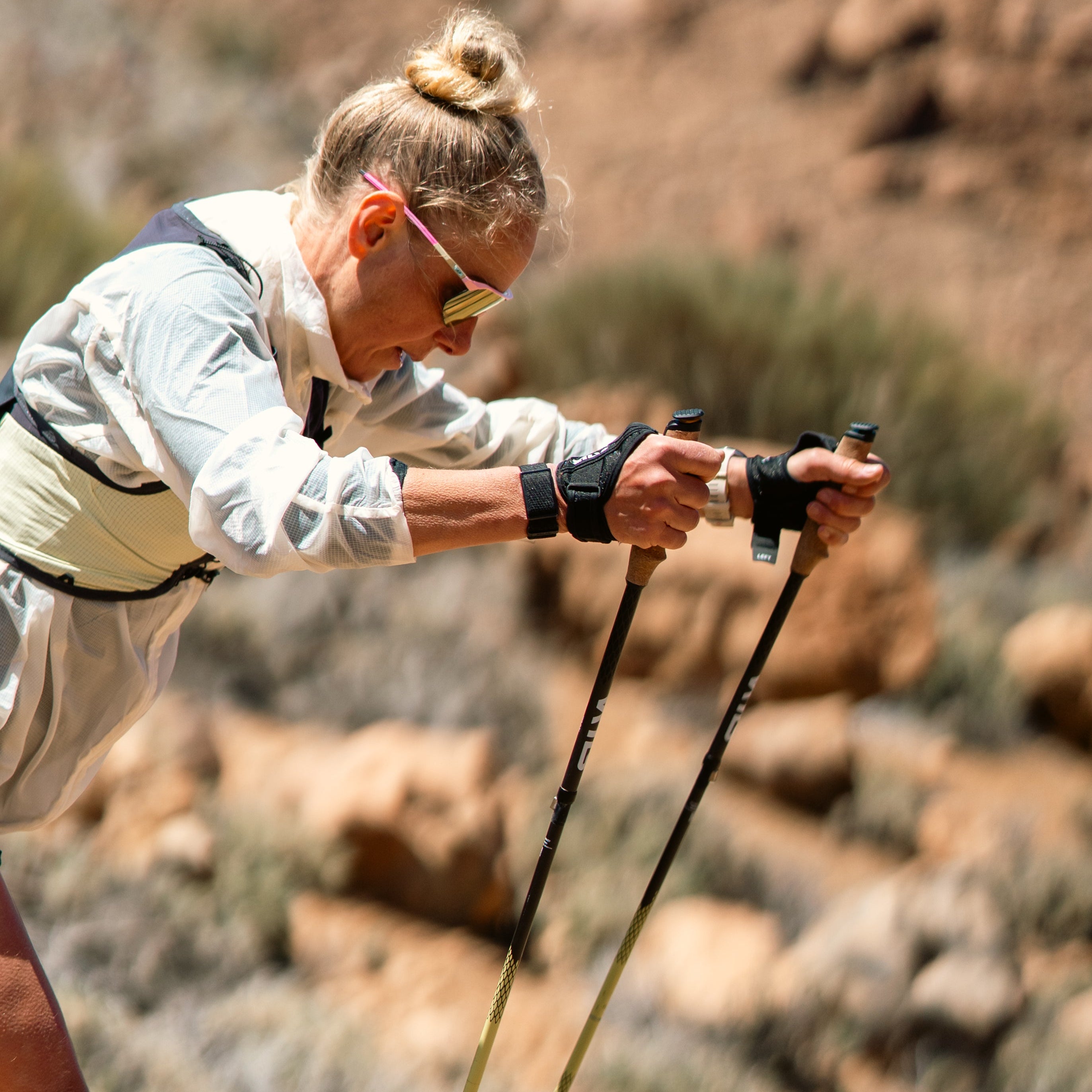
Multiply your height in centimetres by 0.70. For example, if you’re 170 cm tall, the recommended pole length is 119 cm – and you should round up to the nearest available length (120 cm in this case).
The 90° rule
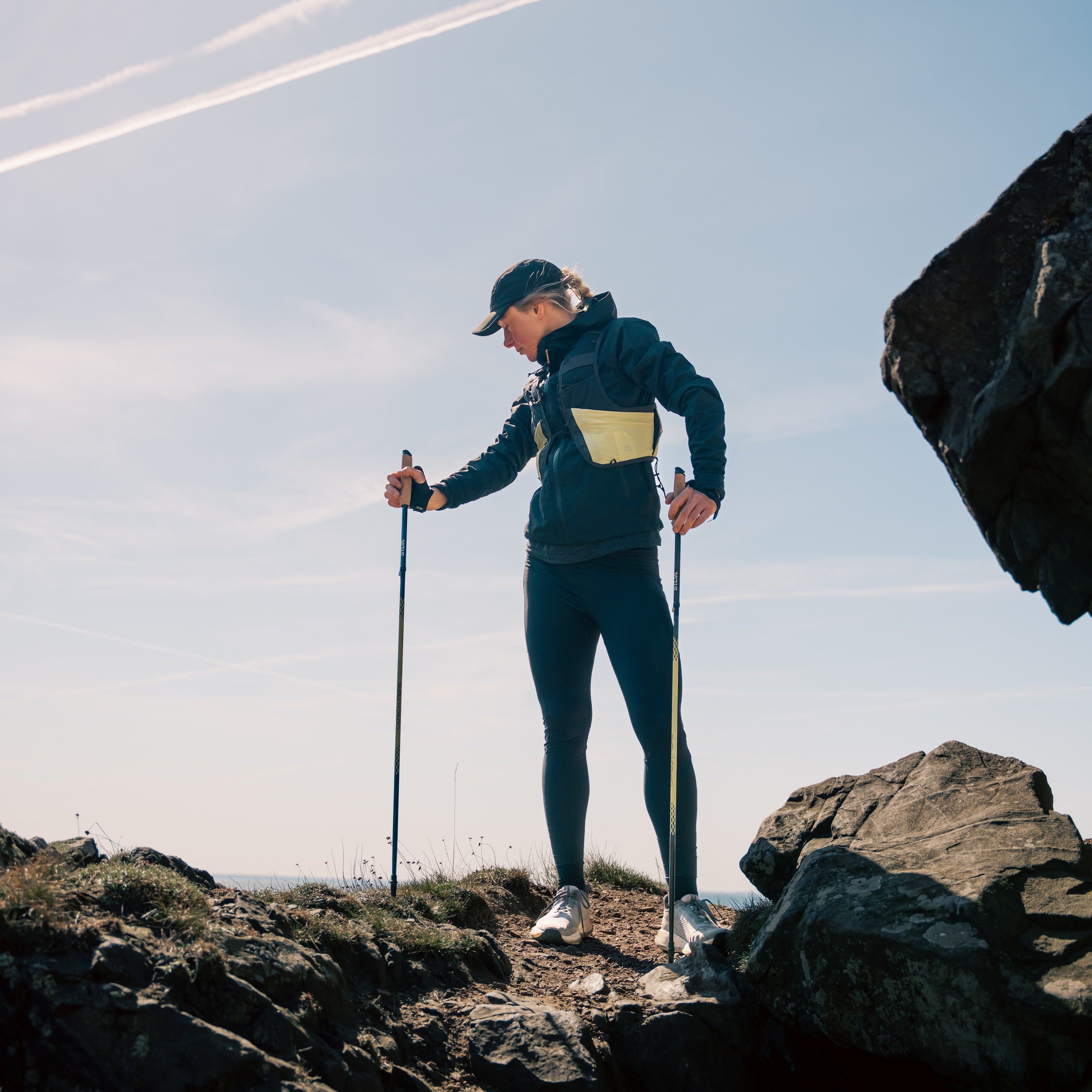
Hold the pole vertically next to your body. If your elbow forms a 90-degree angle, the length is likely correct.
Use the Gloves or Straps Correctly
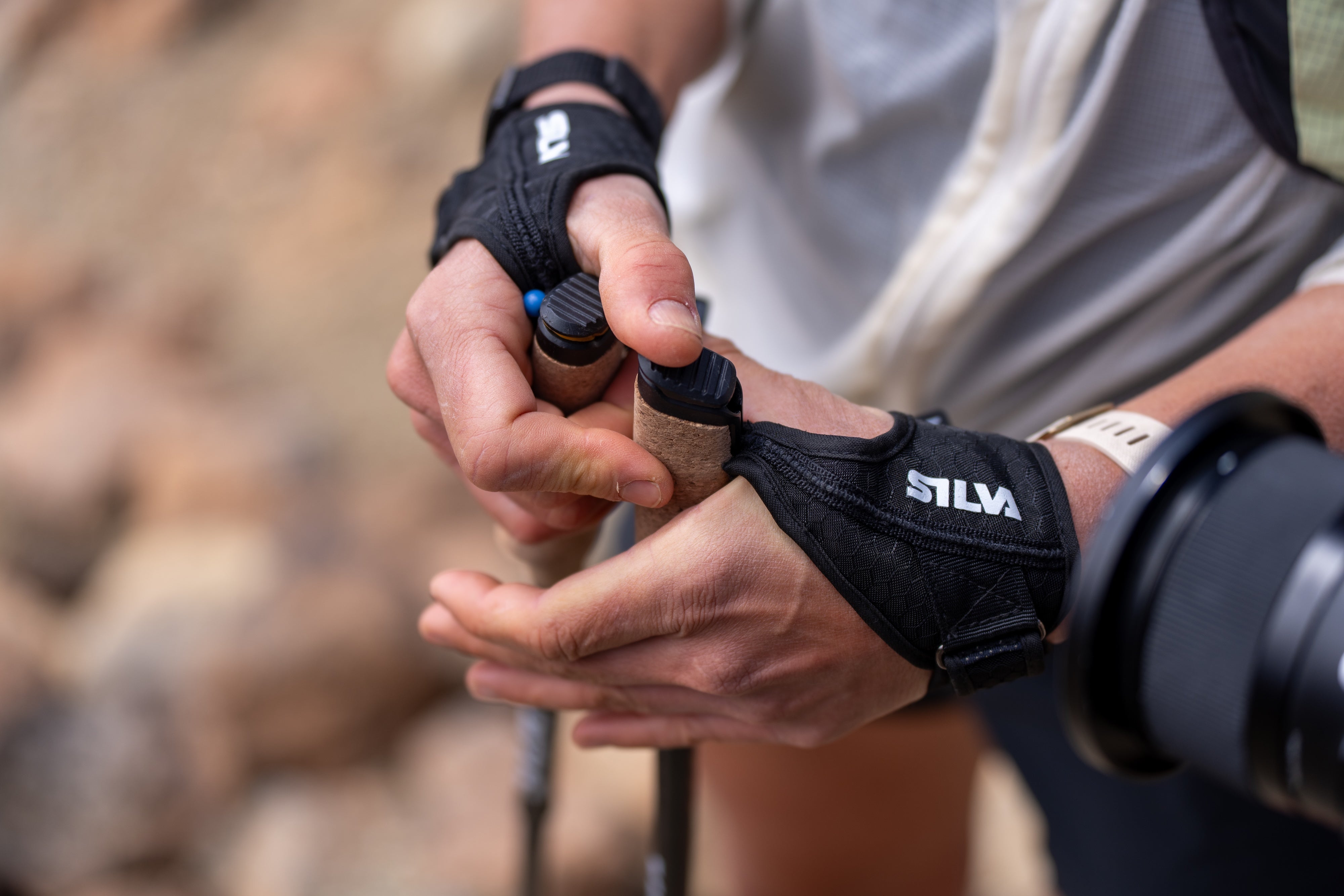
Your poles should support your movement without requiring a tight grip. With the Blueberry System — compatible with gloves or wrist straps — you get a secure and smooth connection between hand and pole.
1. Slide your hand in from underneath.
2. Let the glove or strap take the load as you push.
3. Keep your grip relaxed – this reduces fatigue and improves technique.
The Blueberry System connects directly to the pole for efficient power transfer and quick release when you need to let go.
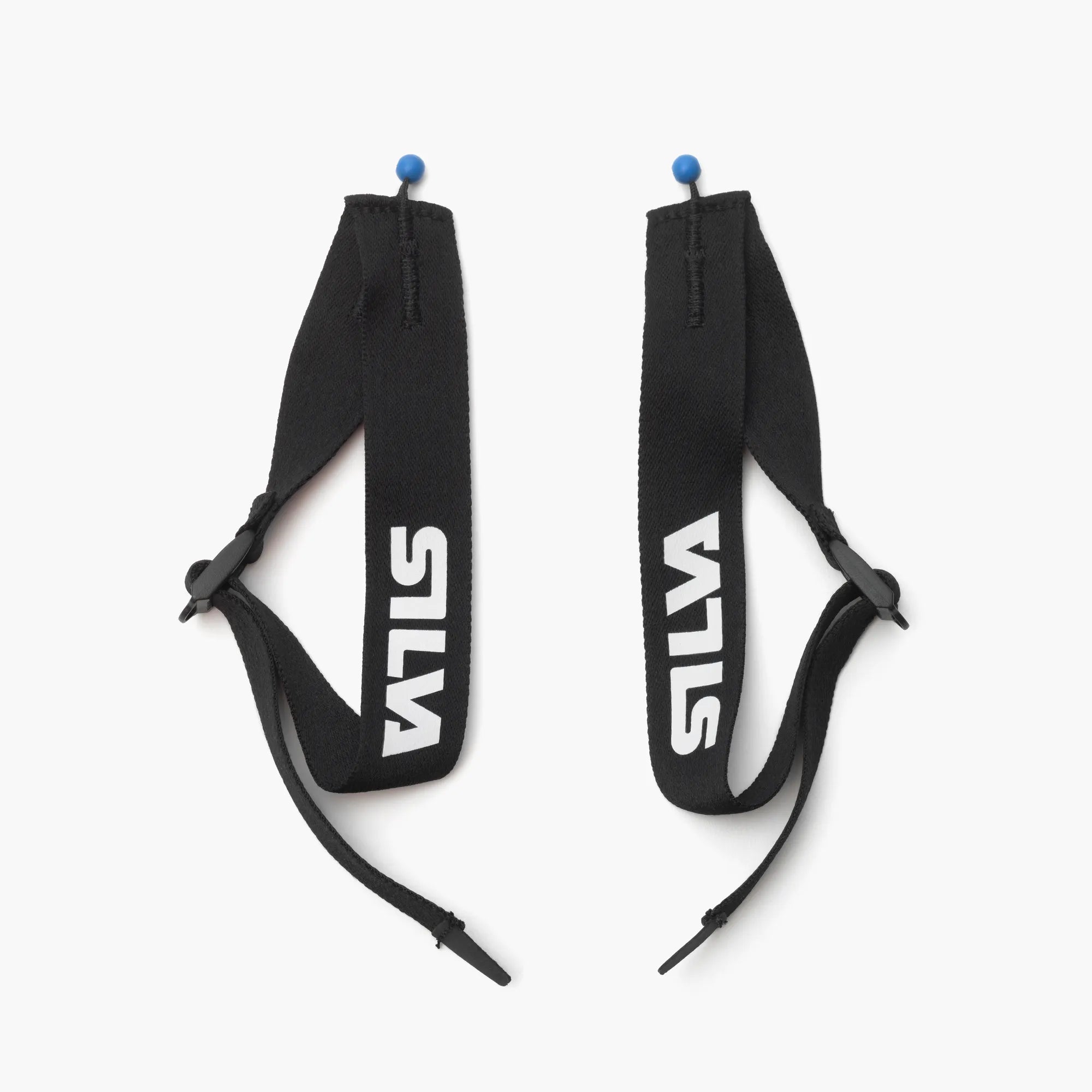
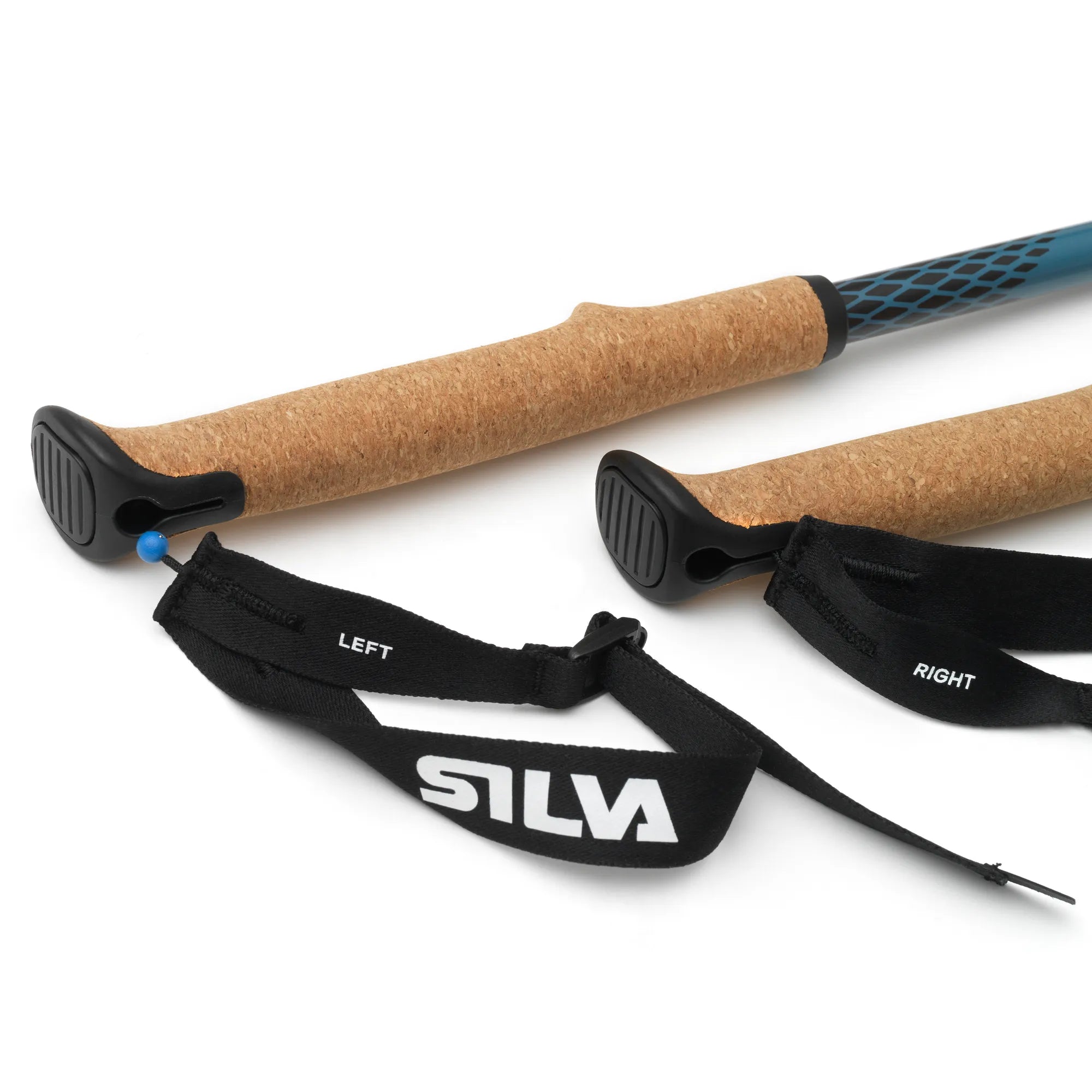
Interchangeable wrist straps for the Blueberry System

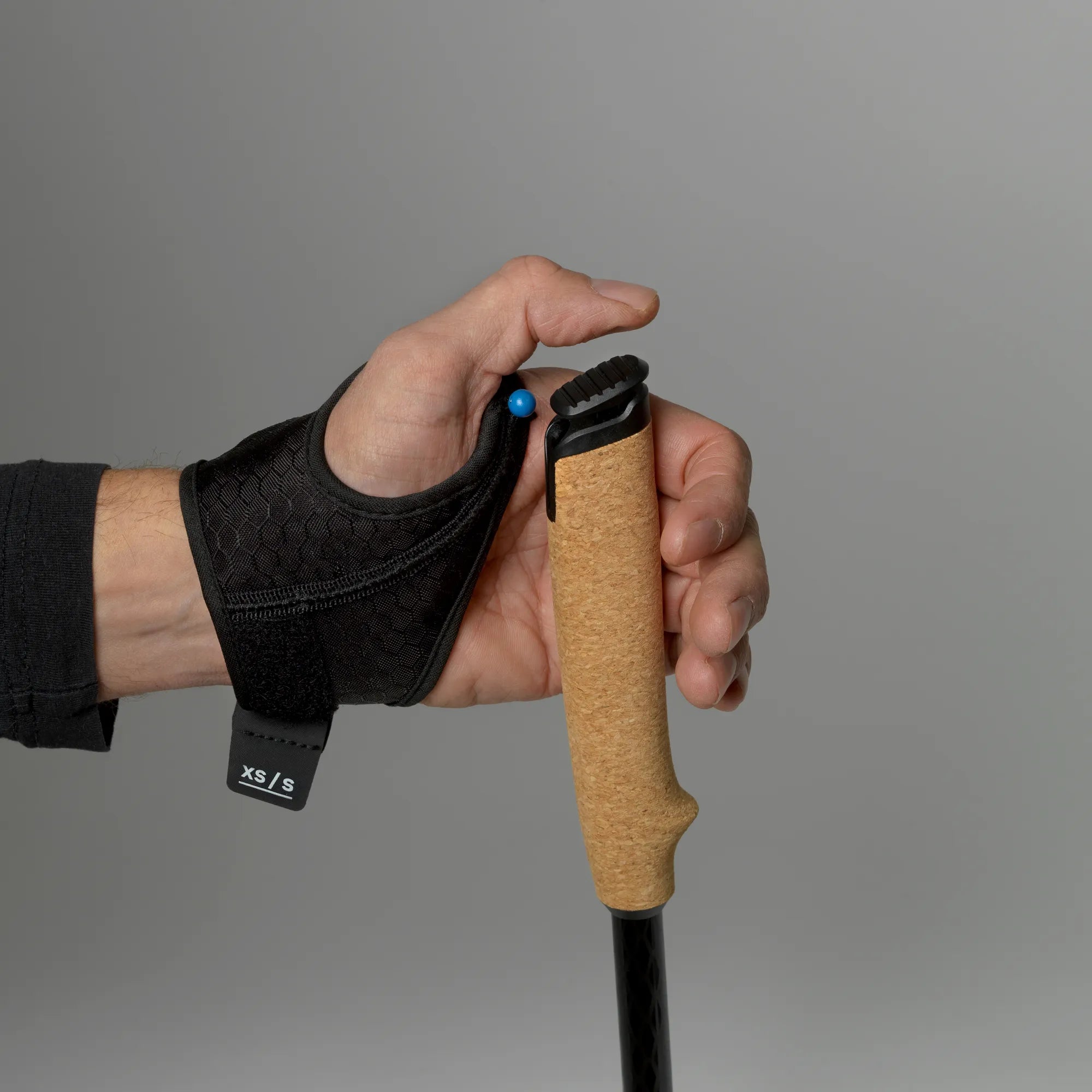
Interchangeable gloves for the Blueberry System
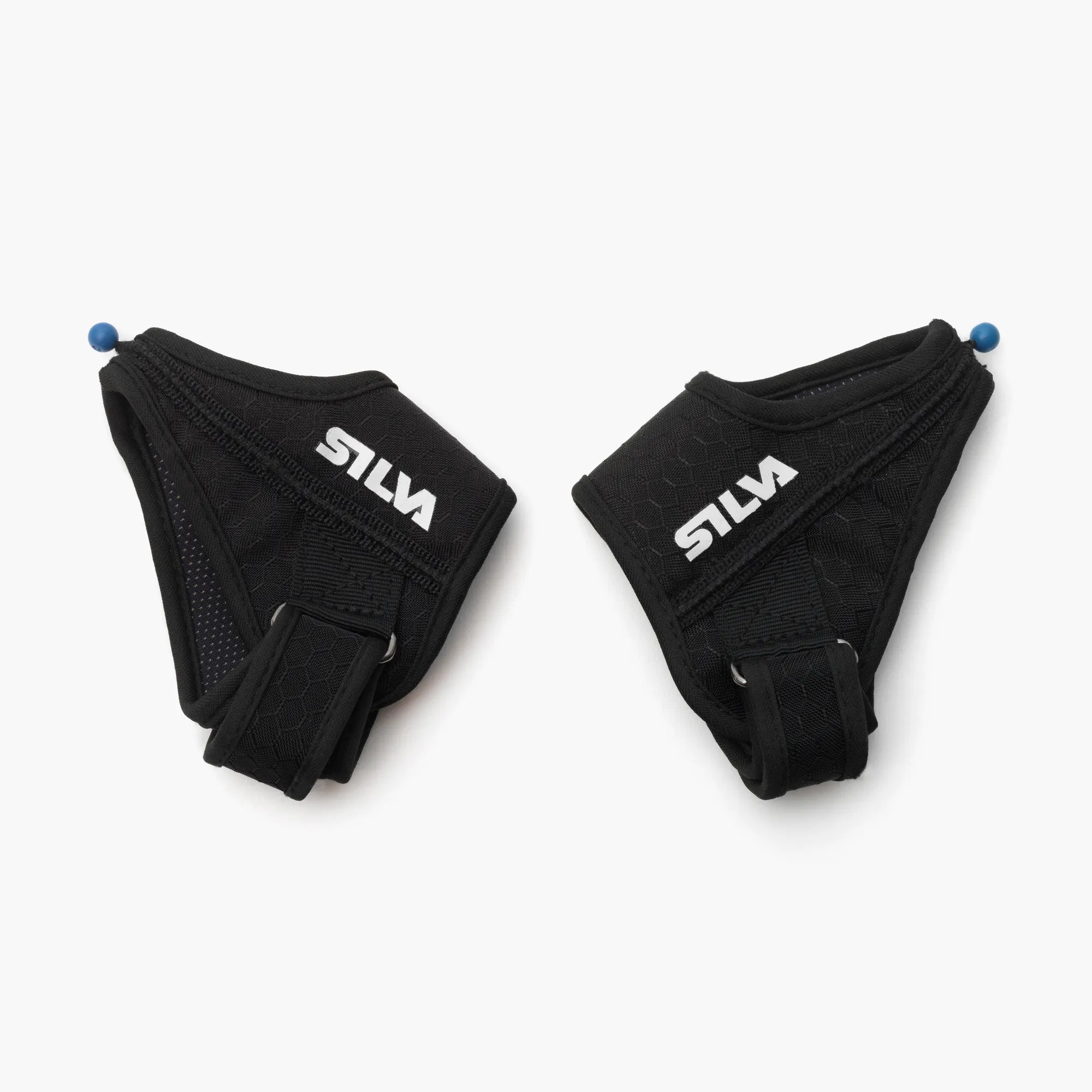
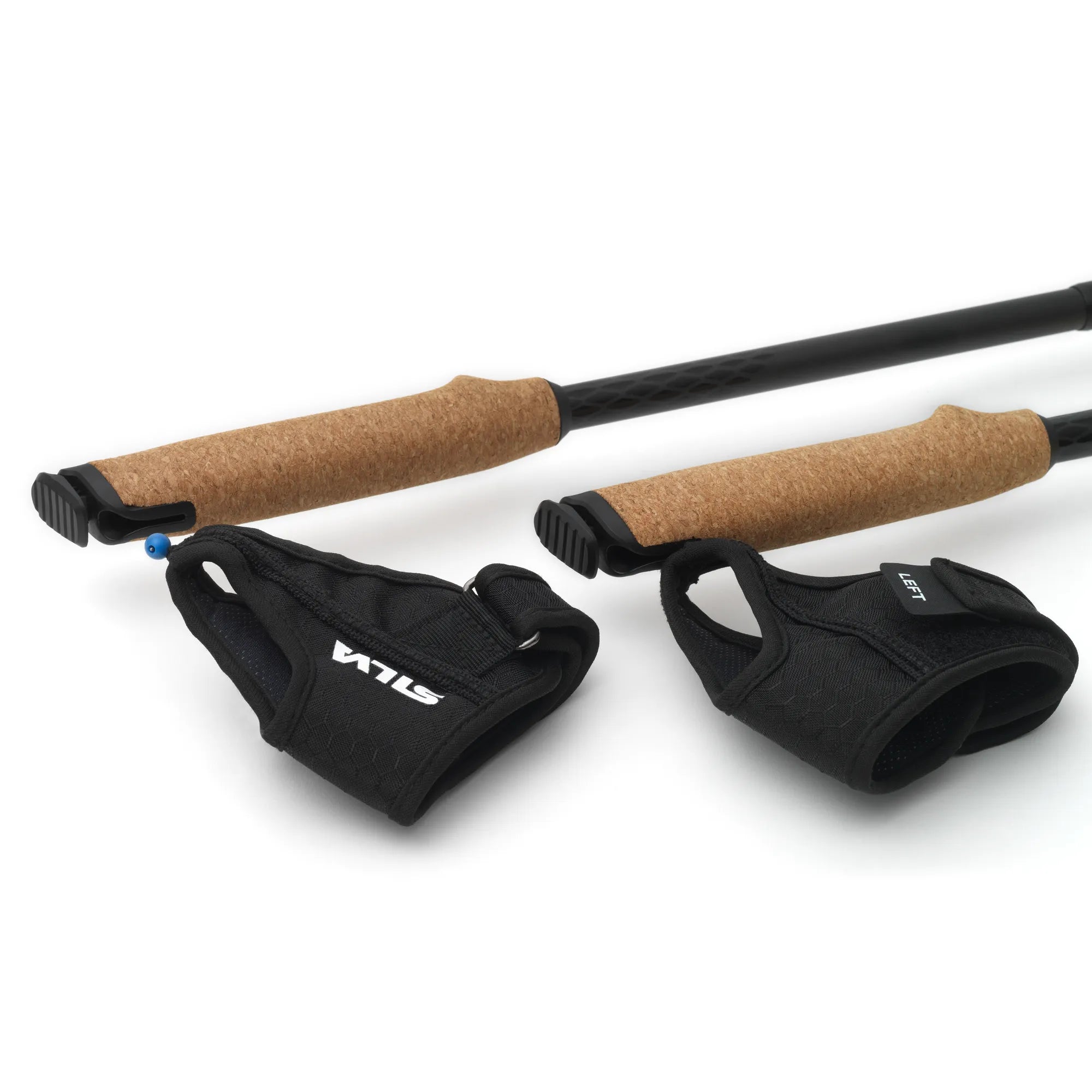
Interchangeable gloves for the Blueberry System
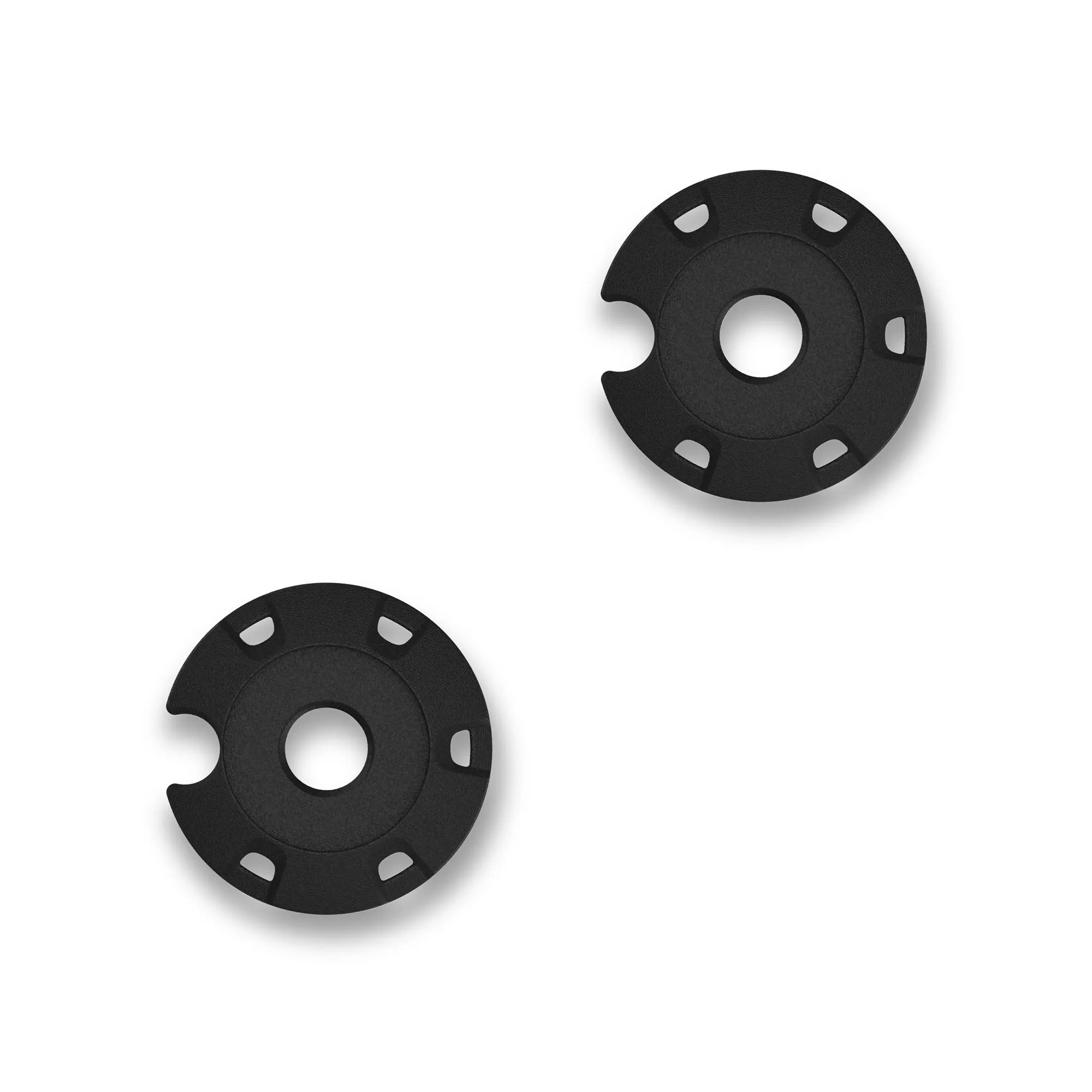
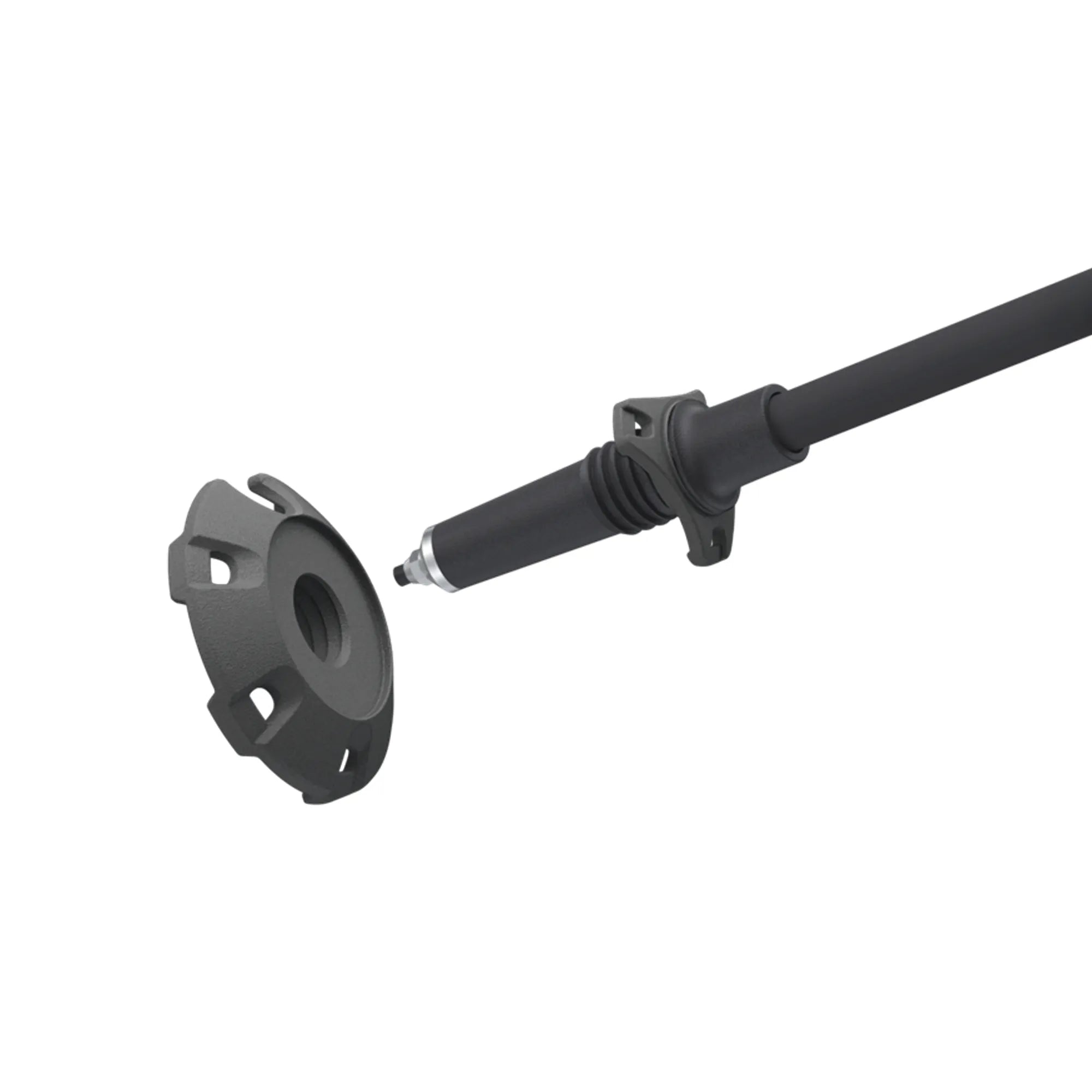
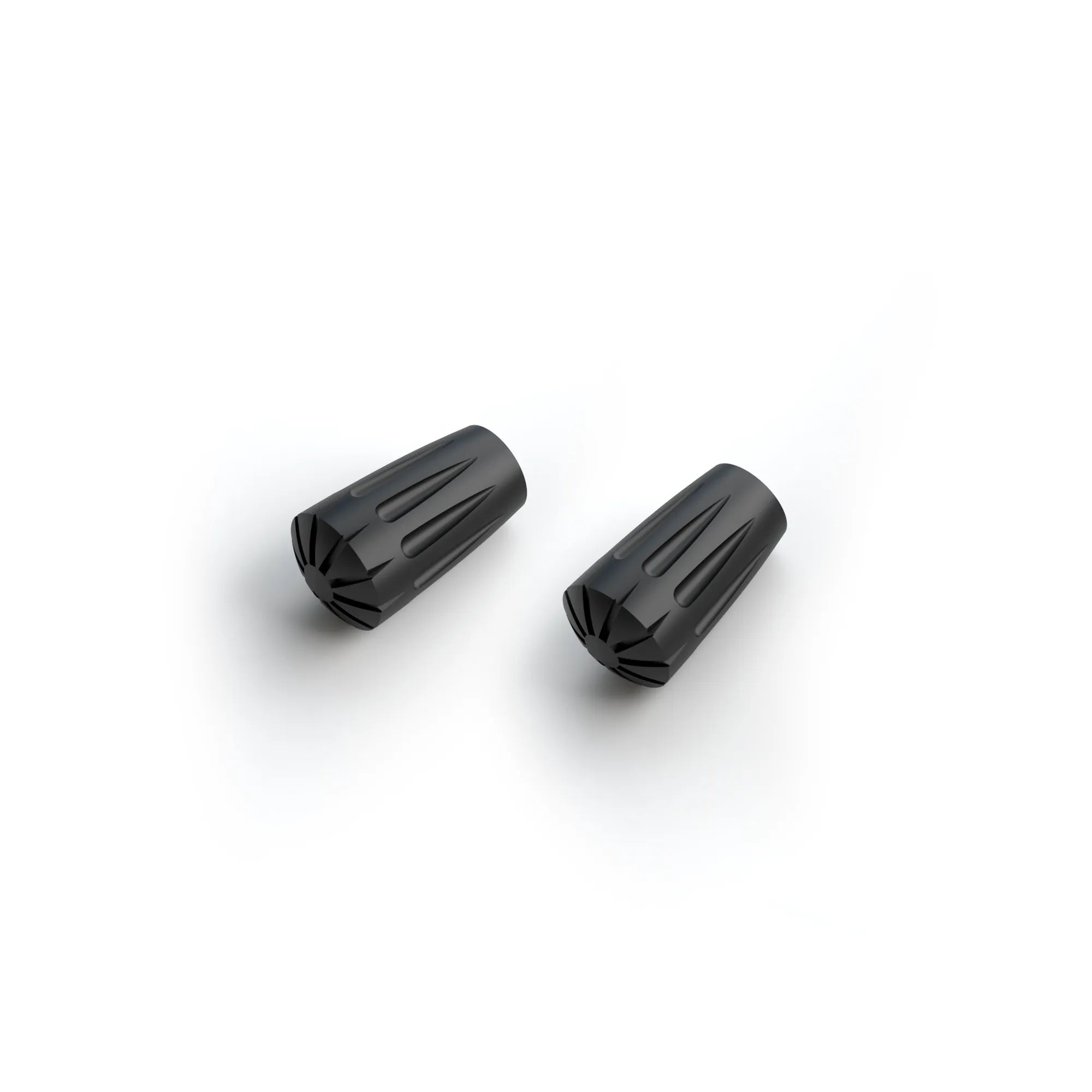
Baskets for mud and soft ground
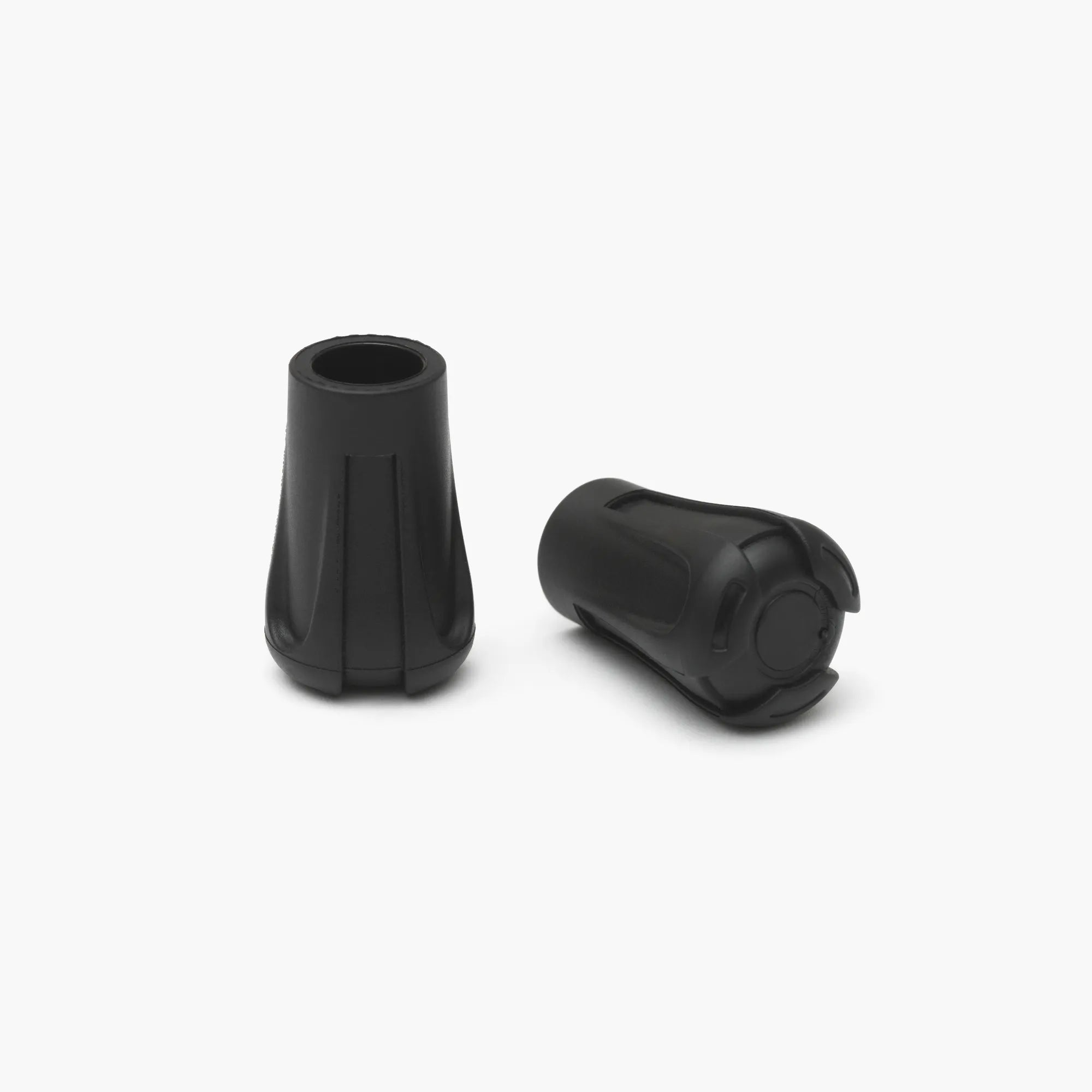
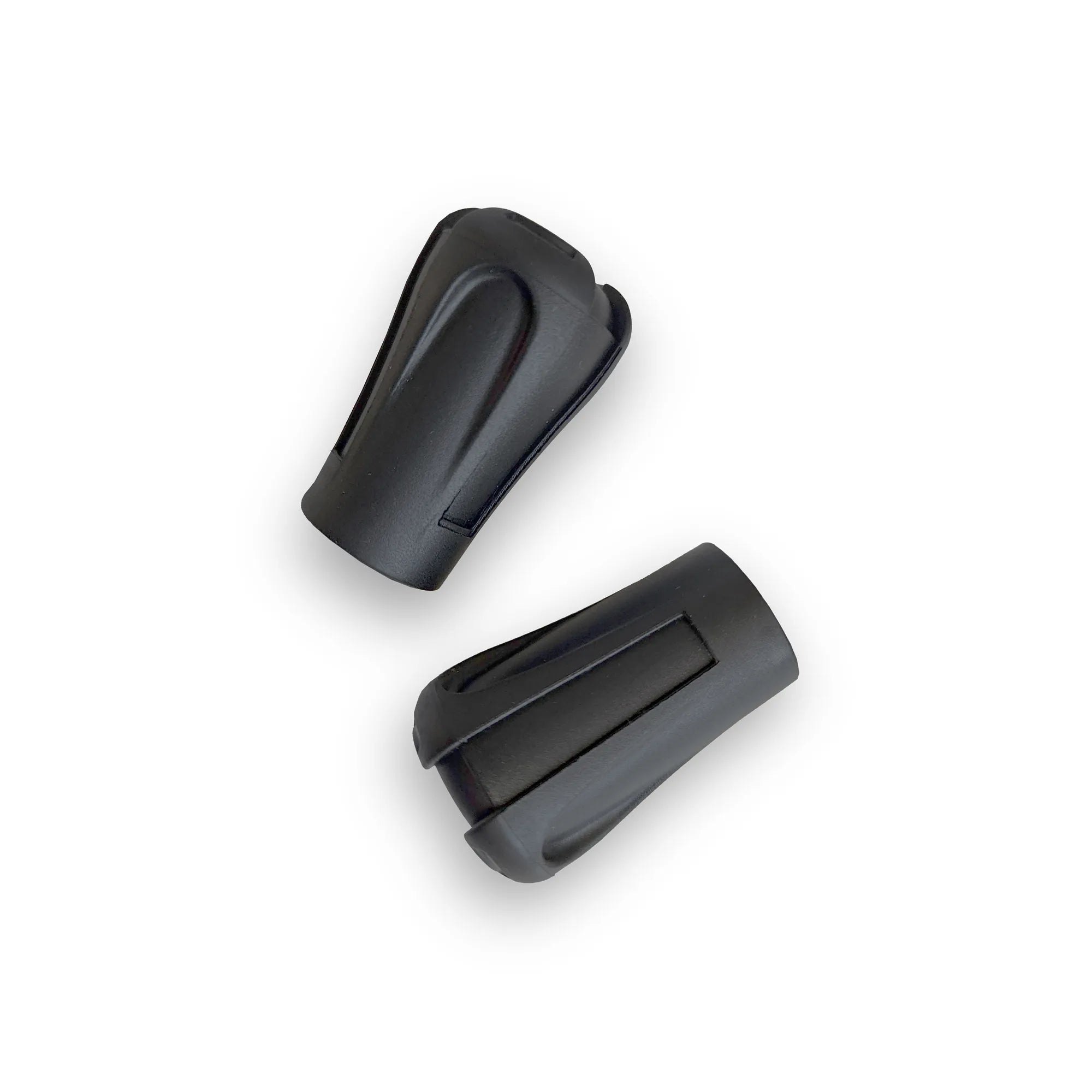
Rubber paws for hard surfaces
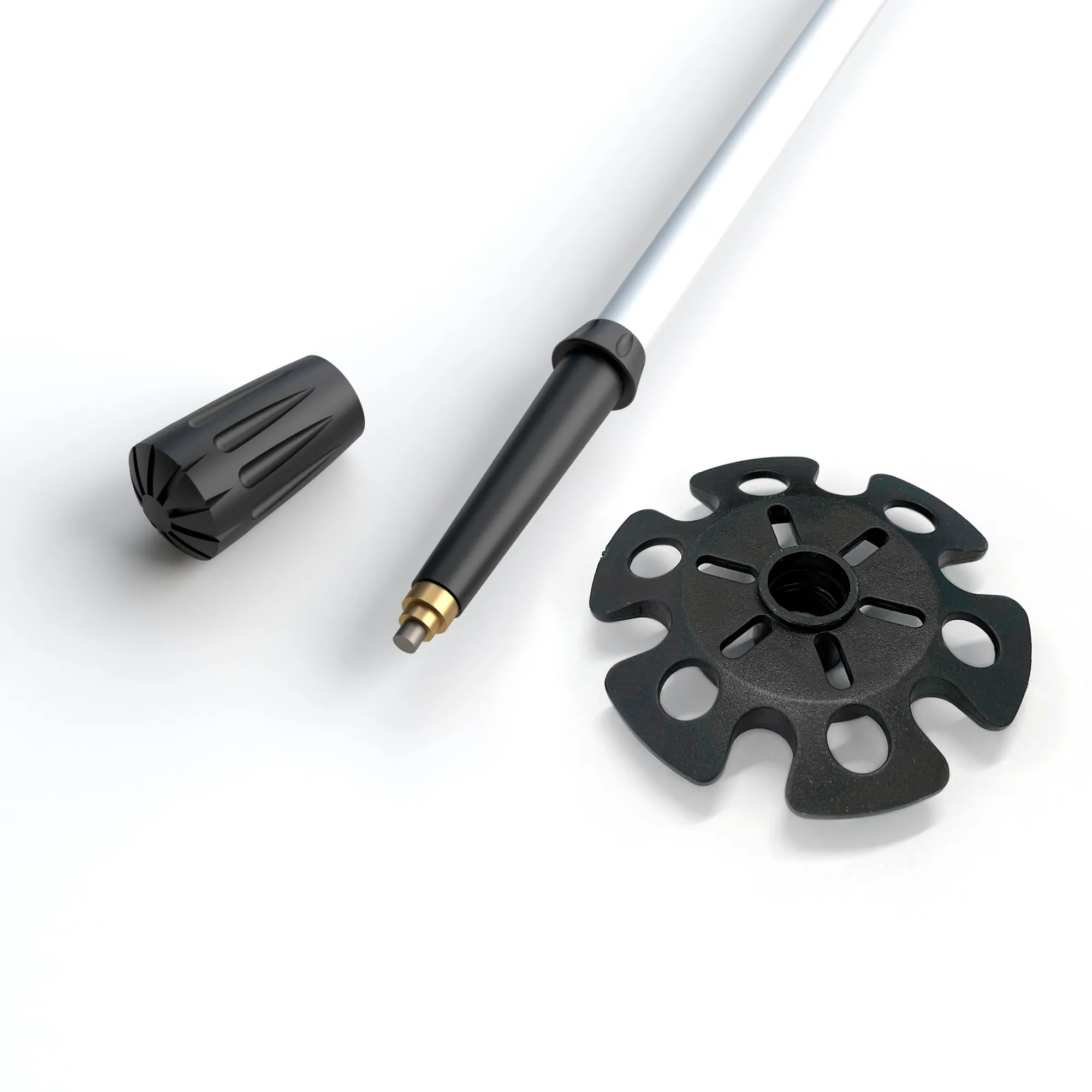
Easy to attach and detach
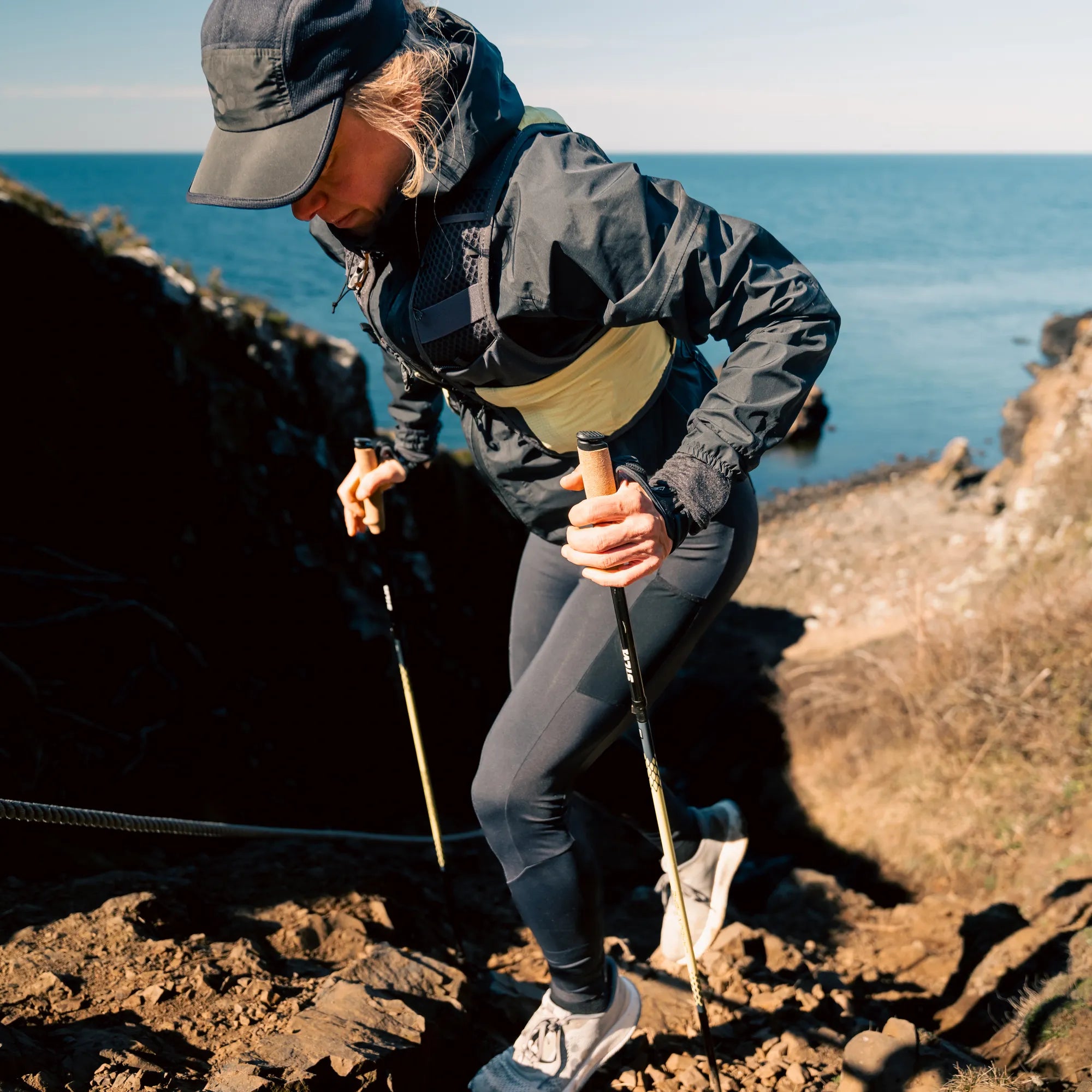
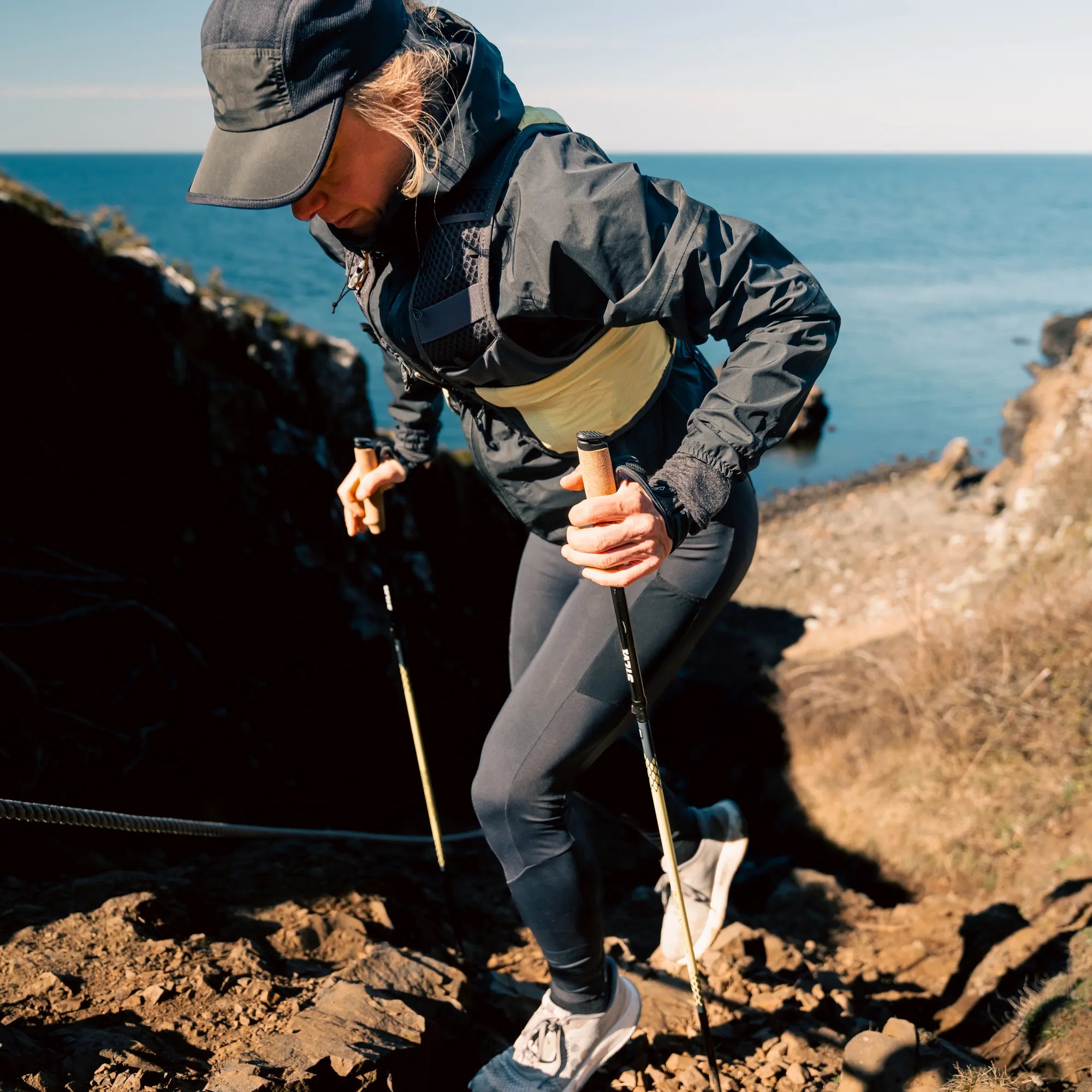
Master the Technique
There’s more than one way to run with poles. Choose your technique based on terrain, effort and pace.
Alternating
Also called contralateral. Plant the opposite pole to your leading foot – just like a natural walking or running rhythm.
Best for: steady climbs, technical flats, low to moderate effort.
Double Poling
Plant both poles at once, slightly ahead of you. Lean forward and push hard.
Best for: very steep climbs where you need maximum power.
Offset Poling
Plant one pole every 2–3 steps, alternating sides.
Best for: long, moderate inclines where you want rhythm without overworking your arms.
Downhill Use
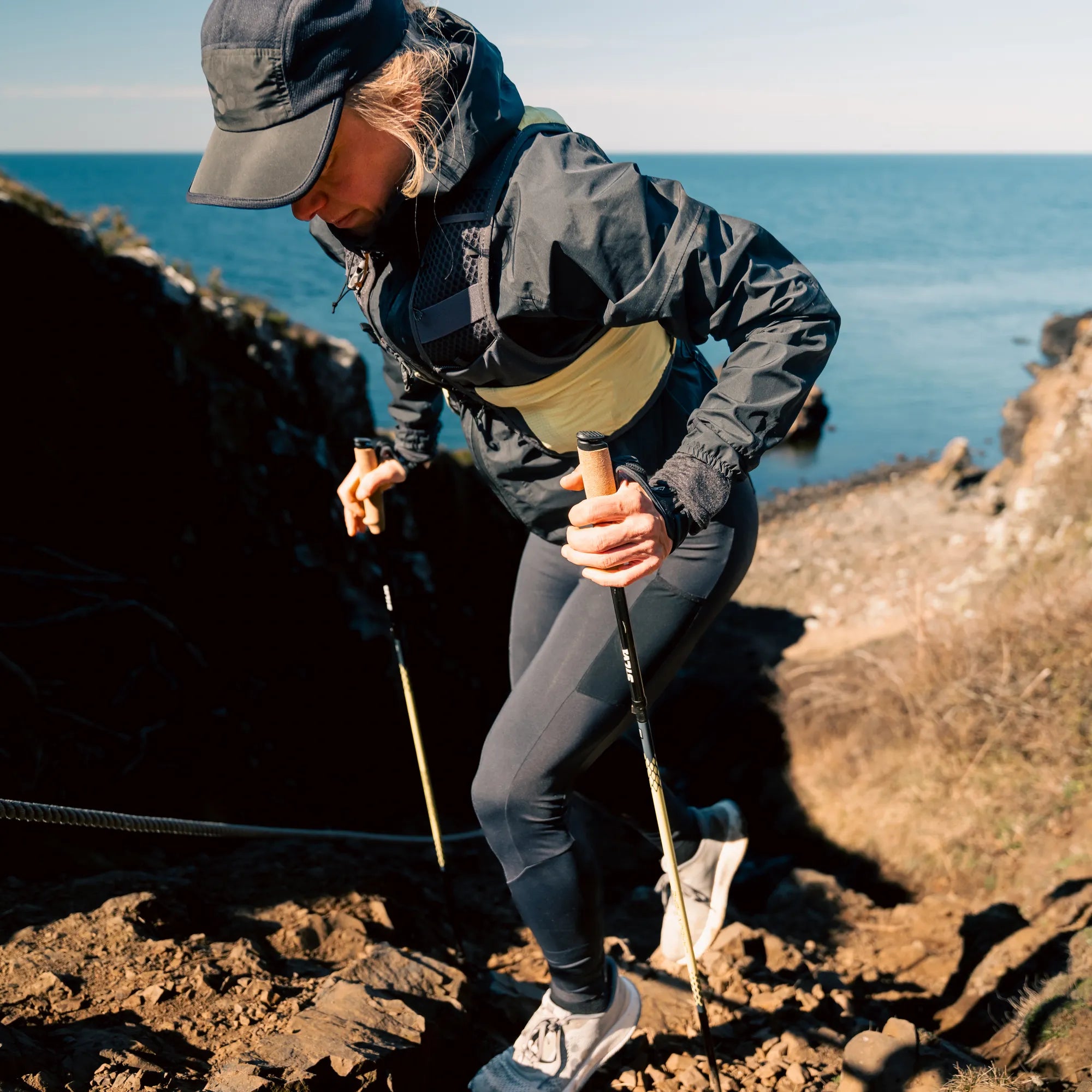
Use poles for balance and braking, especially on rocky or slippery descents. Keep the tips slightly in front or to the sides to stay in control and reduce impact on your joints.

Fold and Store On the Go
When the trail flattens or you want to pick up speed, stash your poles quickly:
– Fold your Silva poles using the Z-fold system.
– Use the quick stretch lock to unfold and reassemble fast.
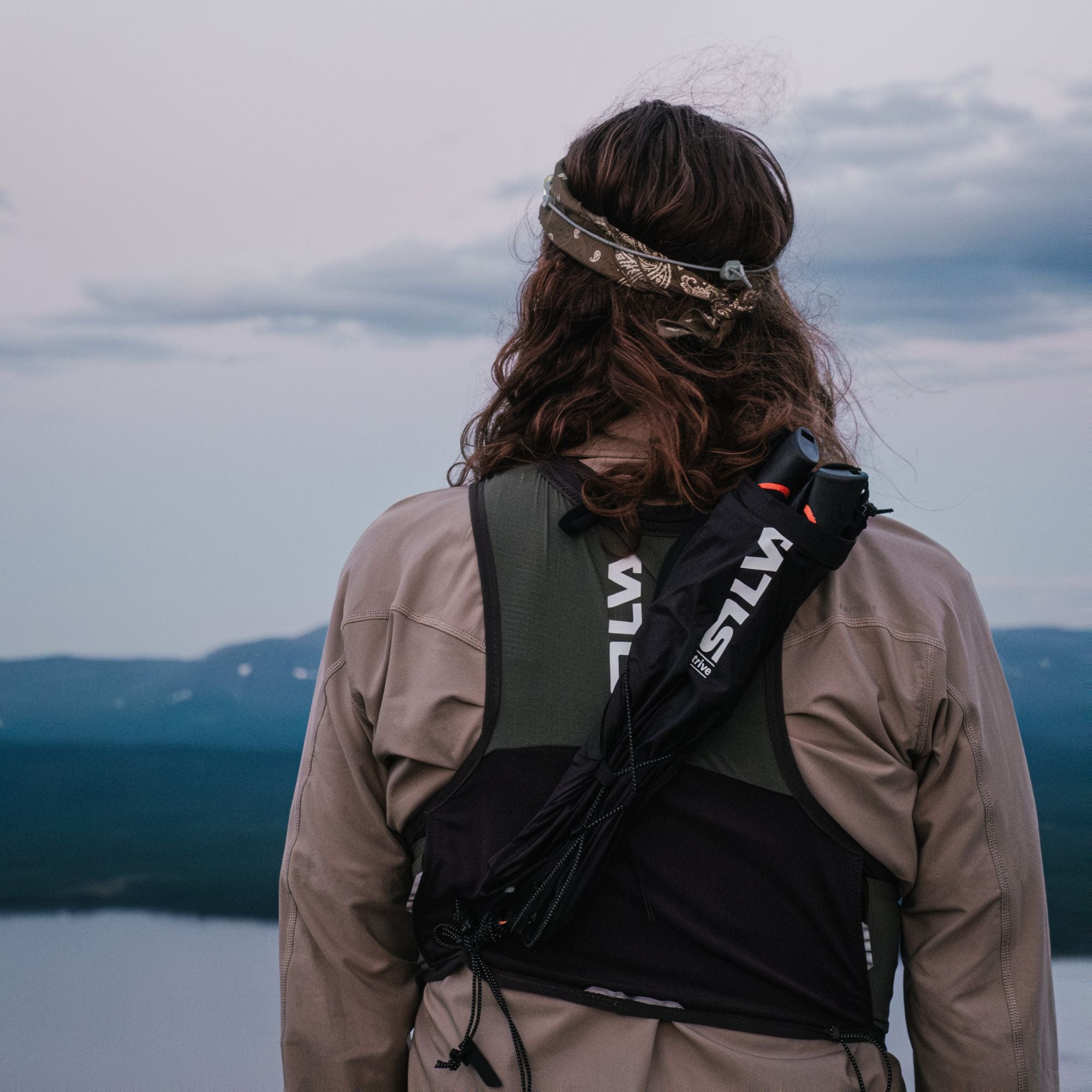
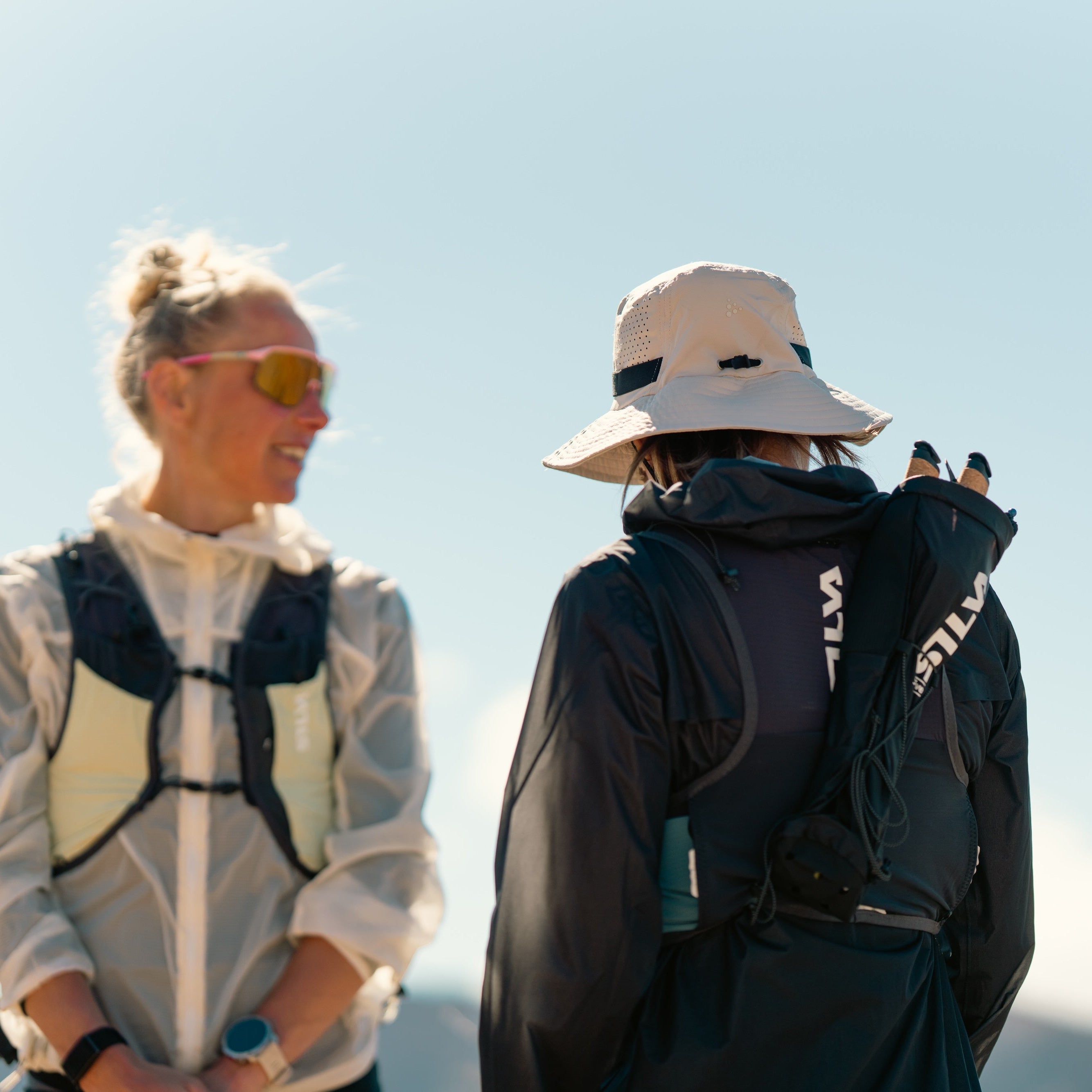
– Store them on your running vest or in a dedicated pole quiver – no need to stop or slow down.
Tip: Practice this before race day so it becomes second nature.
Know When Not to Use Poles
Poles are great – but not always necessary. On fast, flat sections or smooth downhills, they can get in the way or disrupt your flow.
Good times to leave your poles stowed:
– Flat terrain where you want maximum speed.
– Short climbs where deploying them would take longer than running.
– Crowded trails or races where space is tight.
Use your poles strategically, and they’ll work for you.
Silva Poles – made for runners
Lightweight carbon poles with compact Z-fold construction for fast packing and deployment. Developed with trail runners and built for performance, Silva running poles feature extended handles and the Blueberry System for smooth transitions on varied terrain.
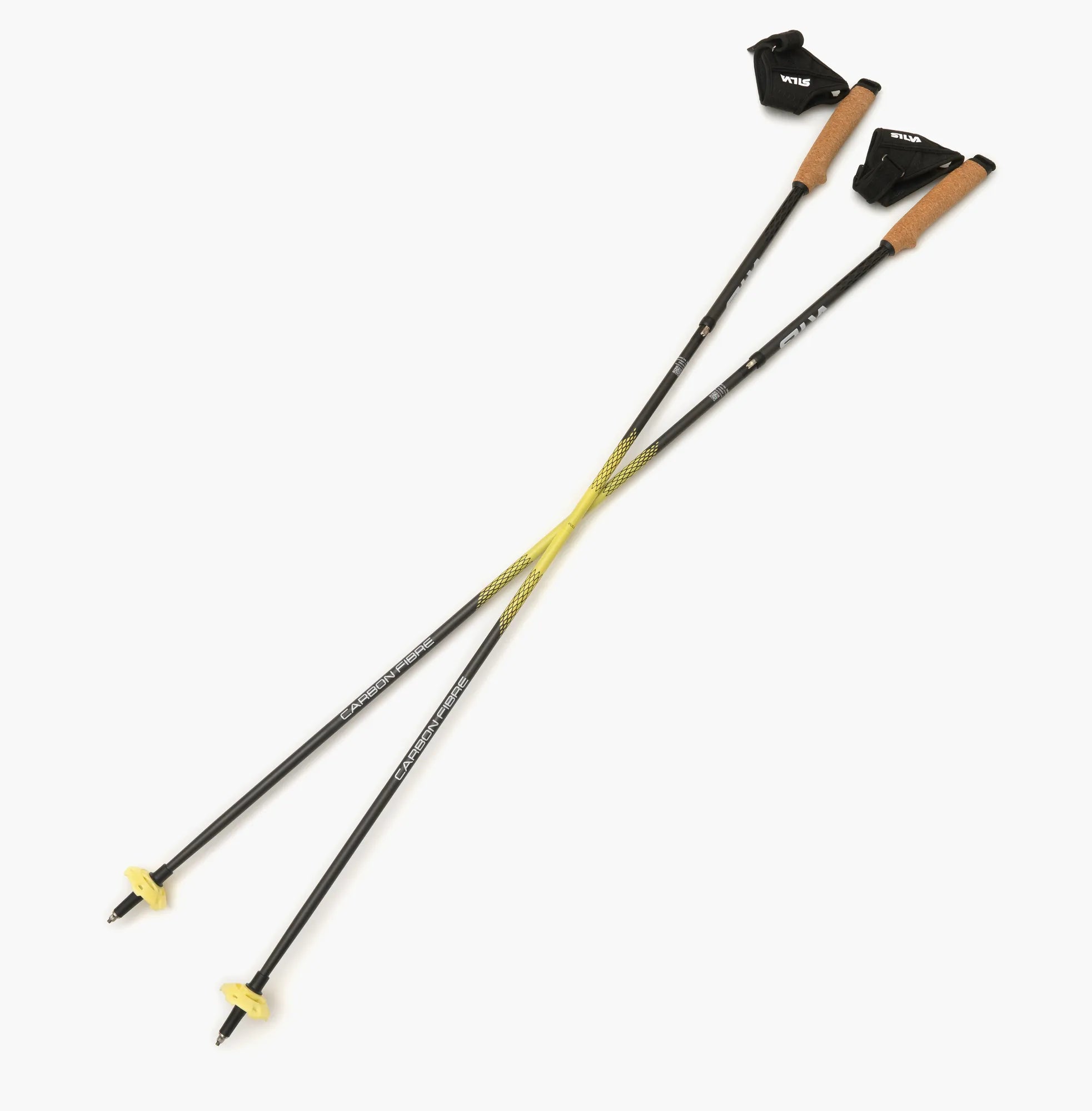
110 cm Z-fold carbon poles for running
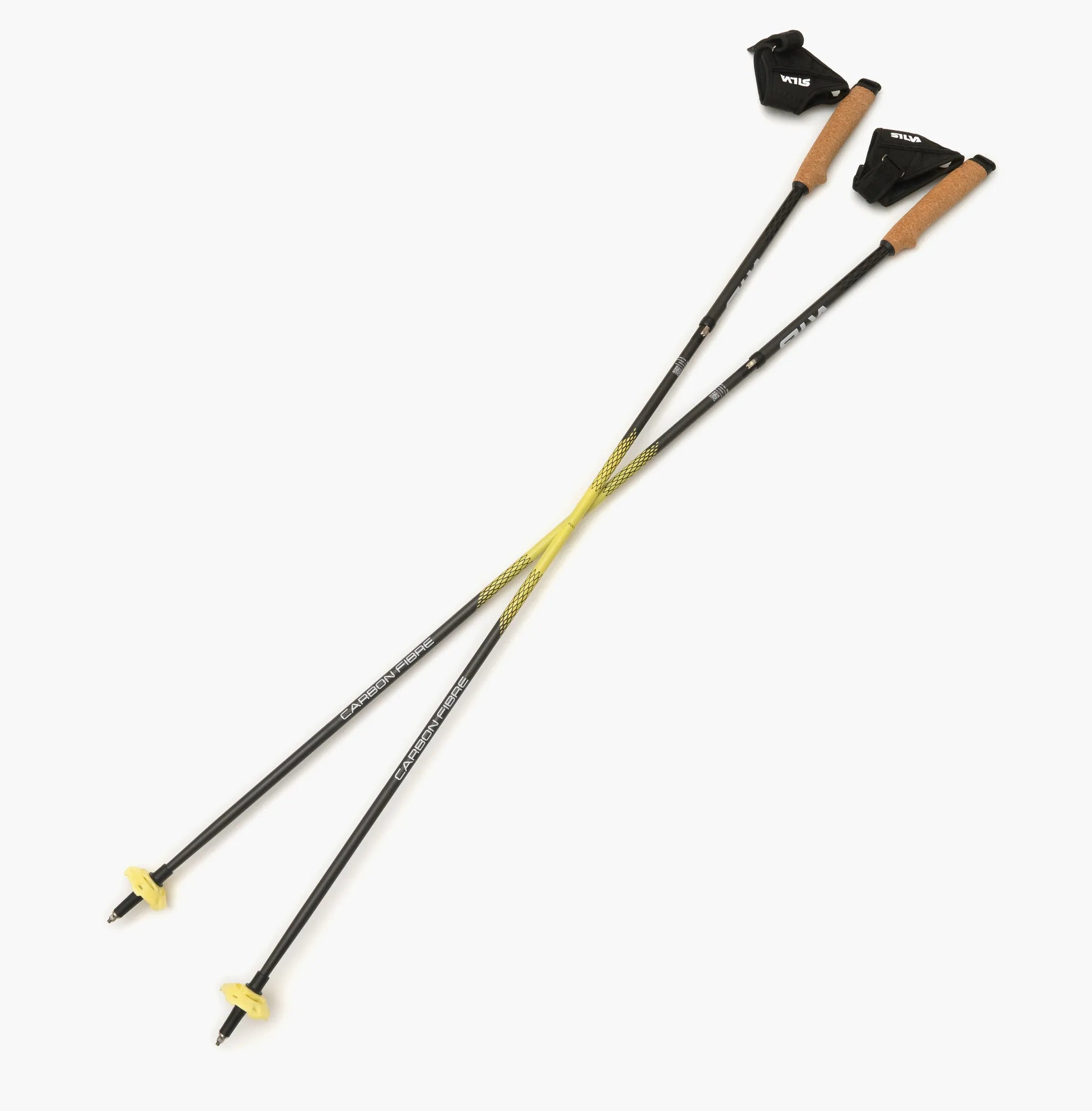
115 cm Z-fold carbon poles for running
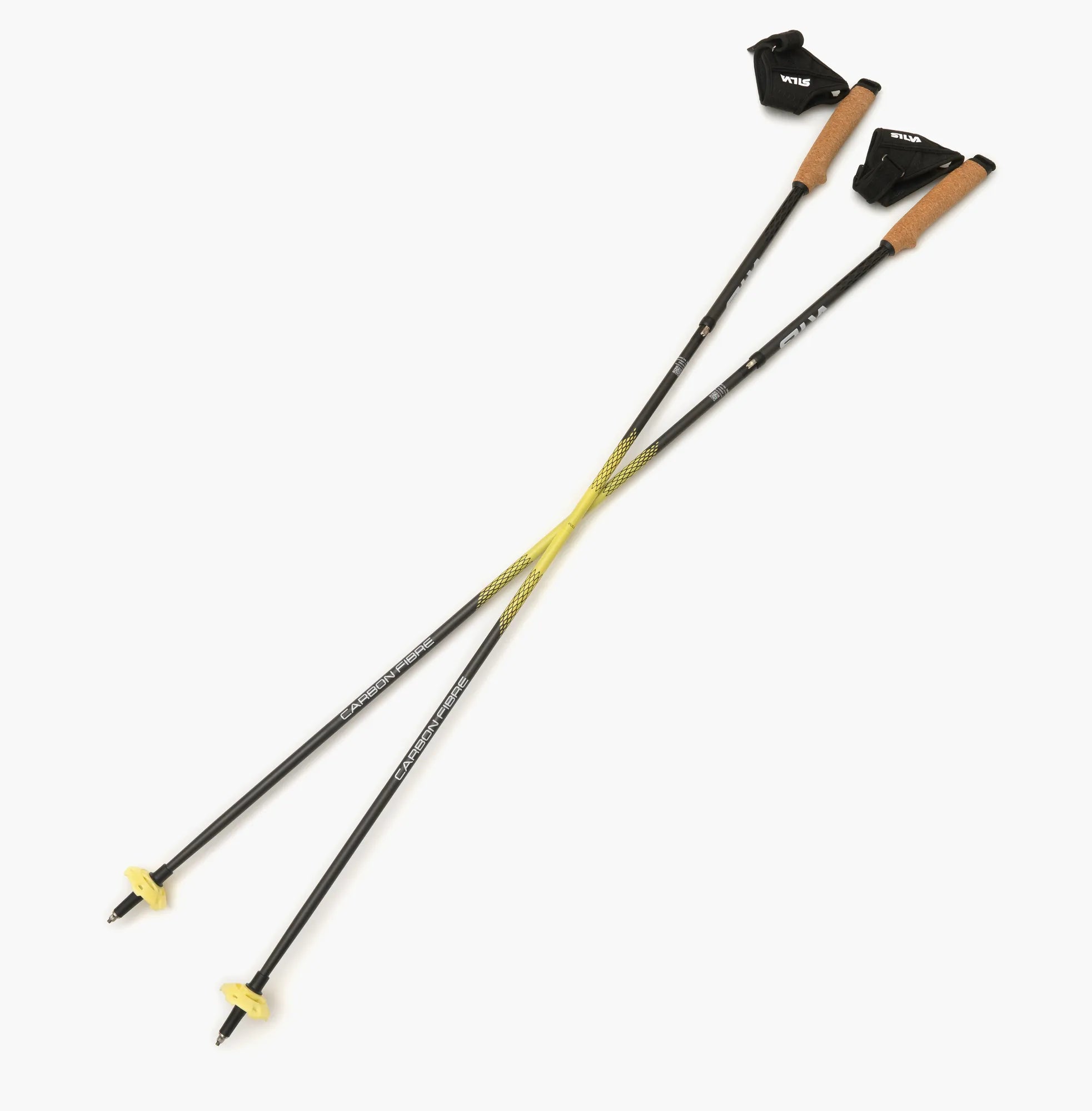
120 cm Z-fold carbon poles for running
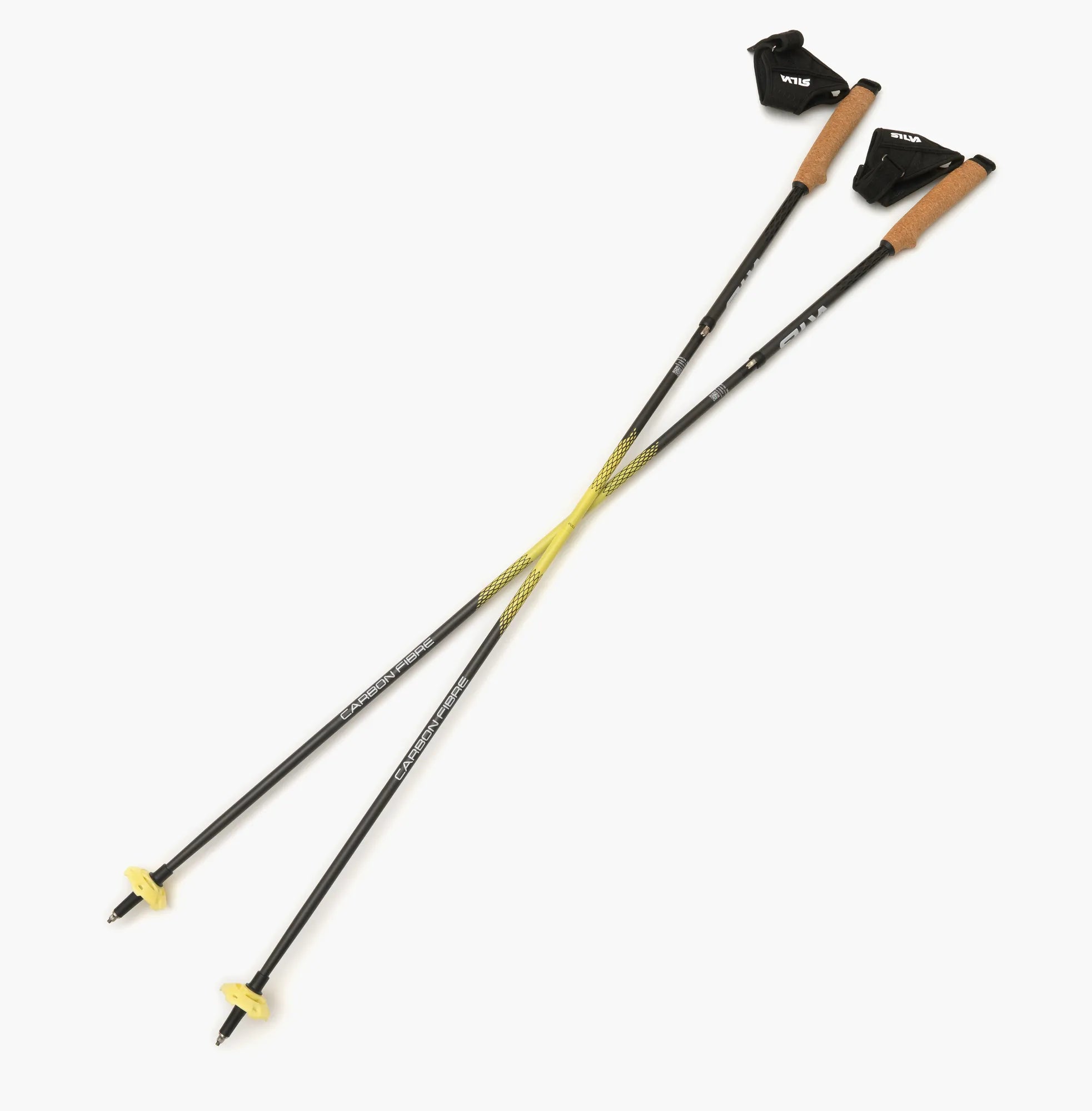
125 cm Z-fold carbon poles for running
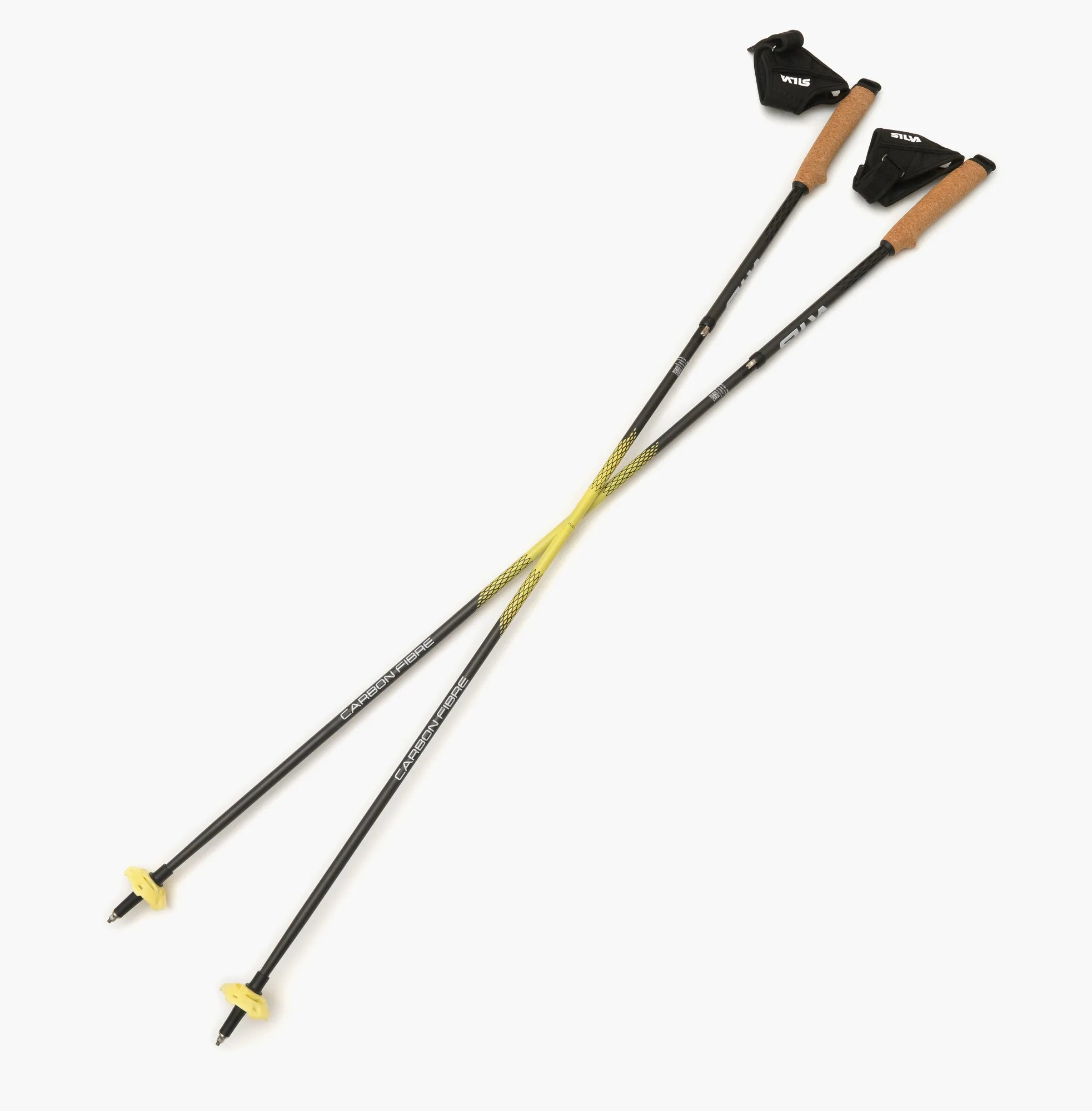
130 cm Z-fold carbon poles for running and trekking


Adjustable Z-fold carbon poles for running
Are you in the right place
Please select your store